Relieve a crowded line
Full vehicles leave passengers behind. When a platform fills, some passengers look for another route or give up.
When this helps
When vehicles regularly fill and a queue grows, more capacity can reduce waiting. More frequent service, larger vehicles and new lines all cost money and operating capacity; first identify the affected period and stop.
Step by step
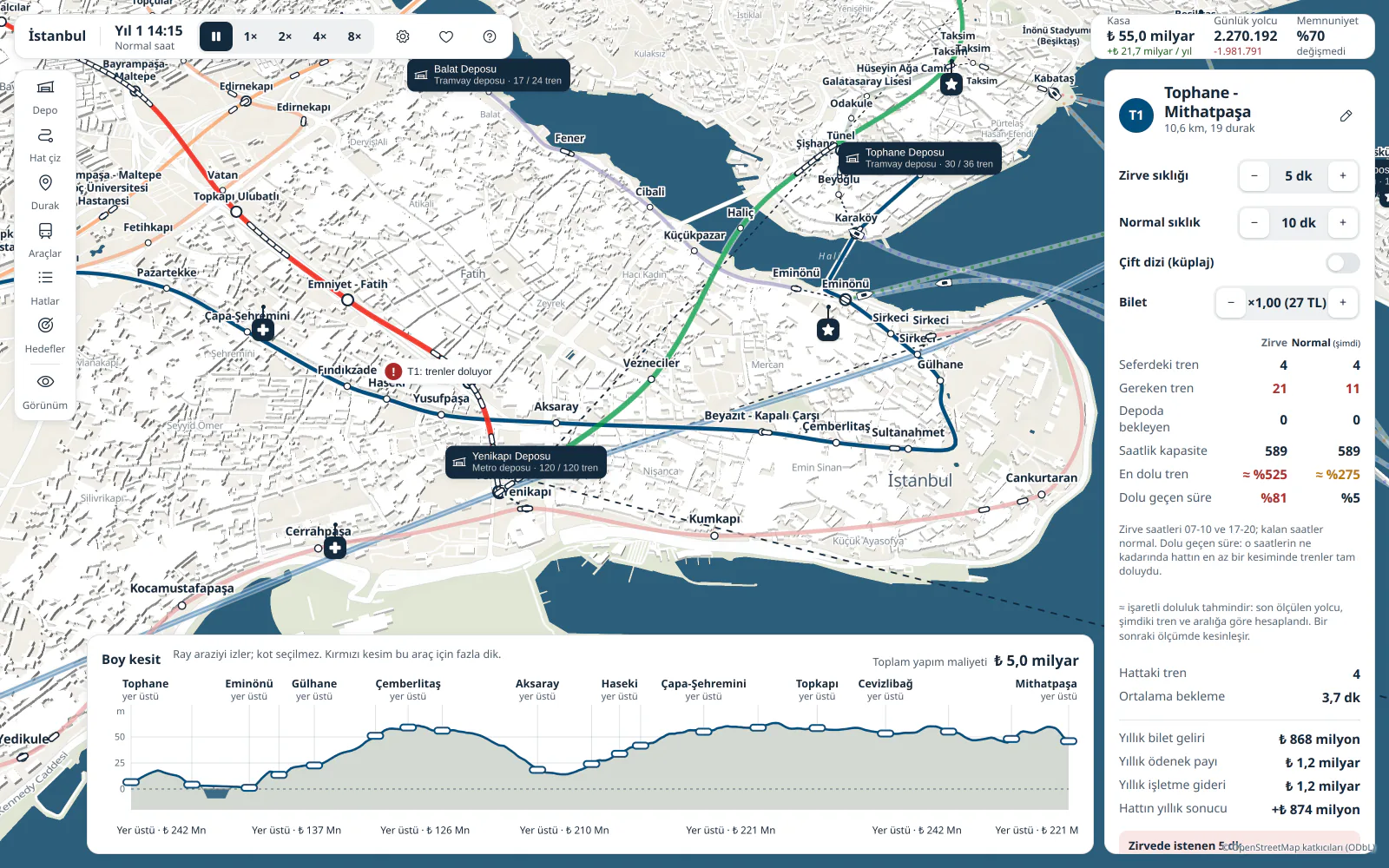
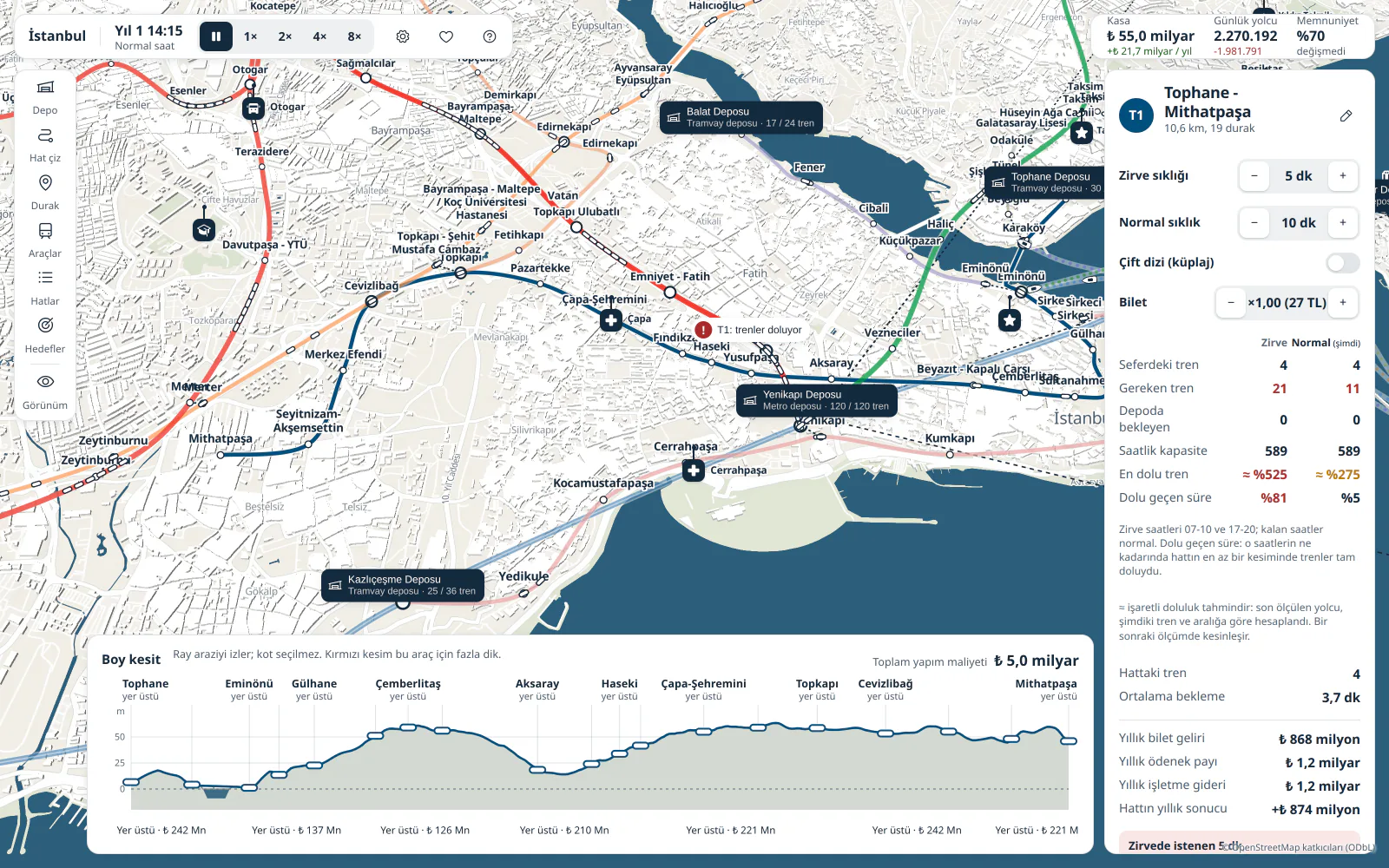
- Click the line and inspect its busiest vehicle, time spent full, passengers waiting and vehicles needed. Reduce Peak frequency and, if needed, Off-peak frequency intervals; assign the additional vehicles required.
-
Buy a larger vehicle in Vehicles. On eligible lines use Coupled pairs, or Convoy for bus rapid transit: each departure needs more vehicles and carries more passengers.
-
If available, inspect and confirm Signalling upgrade, then set a shorter interval yourself. More frequent service needs more vehicles.
-
Consider the line's Fare multiplier. Price affects both route choice and revenue; raising it can reduce demand.
-
Click a crowded station, inspect passenger flows and build a parallel line toward the destination if needed. Current route choice does not account for crowding: a parallel line can attract passengers when travel times are close, and passengers may also seek another route when the platform overflows.
Limits and numbers
The platform limit is 600 passengers. Above it, the game first looks for an alternative route allowing at most 25 extra minutes. Normal route choice does not use crowding. An alternative more than 20 minutes slower than the fastest route is not eligible for normal sharing.
Common errors
The platform warning marks a stop where full vehicles leave passengers behind. Watch the counts of passengers diverted from and arriving from full lines, including after the new line opens.
An open line with no vehicles carries nobody: buy or assign a compatible vehicle from a connected depot. If the requested interval is shorter than the actual one, supply the required vehicles. If signalling restricts frequency, inspect the upgrade. Do not expect every rider to switch as soon as a parallel line opens: travel time and initial route choice matter.
Tips
- Inspect peak and off-peak separately; a problem in one period need not justify more service in both.
- Compare a larger vehicle's price and depot space as well as capacity.
- Compare the queue in the same period before and after opening a new line.
- Transfer and waiting times affect the attractiveness of the parallel route.